Anti-poaching
Our anti-poaching program is built on the strength of our local community scouts, recruited and trained to protect the Somali giraffe and their habitats across the vast landscapes of northeastern Kenya. In partnership with the Kenya Wildlife Service (KWS), these community scouts form joint patrol teams that monitors threats, deters illegal activity, and helps secure critical giraffe habitats.
Some scouts are reformed poachers, whose insider knowledge allows the team to anticipate poaching tactics and engage former colleagues in conservation, turning potential threats into allies for giraffe protection. Their deep familiarity with the terrain has been invaluable for both SGP and KWS in mounting effective patrols.
To enhance operational efficiency, SGP uses EarthRanger to track all ranger movements in real time, receive instant field updates, and map incidents as they happen. This integration of technology and local expertise has contributed to a significant reduction in poaching incidents and rapid response to threats on giraffes and other wildlife species.
De-Snaring
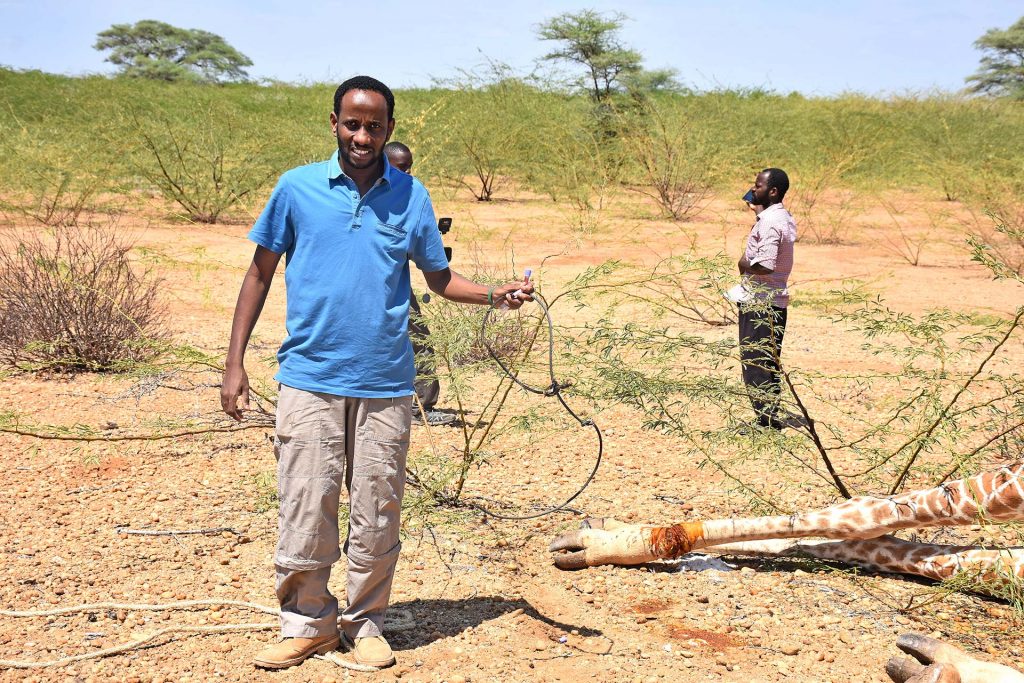
Snaring remains the most common method of poaching in our project area, posing a serious threat to Somali giraffes and other wildlife species. Poachers set wire and rope snares intended for bushmeat species, but these indiscriminate traps frequently injure non-target animals, including giraffes, which are increasingly affected by the illegal cross-border bushmeat trade.
While smaller mammals often die immediately, larger species such as giraffes may escape with snares still attached. These animals endure prolonged suffering as the snares constrict blood flow, cause deep wounds, infections, and in severe cases lead to permanent injury or loss of limbs.
SGP works closely with the Kenya Wildlife Service (KWS) Mobile Veterinary Unit to conduct de-snaring operations and provide emergency treatment to affected animals. At the same time, we are in the process of establishing our own mobile veterinary unit to improve response times and expand coverage across remote giraffe habitats.
During de-snaring operations, we record snaring locations and injury data on EarthRanger, allowing us to identify hotspots, target patrol efforts, and prevent future incidents through early intervention and focused enforcement.